
Bobby Shmurda’s career is one of hip-hop’s most unusual stories of sudden fame, interrupted momentum and the challenge of rebuilding a music career after years away from the industry. In 2014, the Brooklyn-associated rapper became an internet sensation with “Hot N*gga,” a track whose infectious beat, memorable delivery and accompanying Shmoney Dance spread far beyond traditional rap audiences.
His rise happened at remarkable speed. The song gained traction online, the dance became a viral trend, and major names in entertainment began acknowledging the movement. Yet just as his career appeared to be accelerating, legal troubles and a prison sentence changed its direction. Instead of following the usual path from breakthrough single to album releases and touring, Shmurda spent years away from the music business.
His return in 2021 brought celebration, renewed attention and questions about what his next chapter would look like. Could an artist whose biggest hit was released years earlier build a lasting career in a rapidly changing industry? Would listeners still connect with the sound and personality that made him famous?
Bobby Shmurda’s story is about more than one viral song. It touches on Brooklyn rap, internet culture, the consequences of legal decisions, the pressure of sudden fame and the difficult work of creating a second act. His subsequent releases show that his musical story did not end with “Hot N*gga,” even though matching the impact of that early breakthrough presents a challenge.
Bobby Shmurda at a Glance
| Detail | Information |
| Professional name | Bobby Shmurda |
| Birth name | Ackquille Jean Pollard |
| Date of birth | August 4, 1994 |
| Age in 2026 | 32 |
| Birthplace | Miami, Florida, United States |
| Musical background | Brooklyn, New York |
| Profession | Rapper and songwriter |
| Breakthrough single | “Hot N*gga” |
| Signature viral trend | The Shmoney Dance |
| Record label history | Epic Records and later independent releases |
| Known for | Brooklyn rap, energetic delivery and viral influence |
Biographical and music-industry sources identify Shmurda by his birth name, Ackquille Jean Pollard, and connect his breakthrough to the 2014 success of “Hot N*gga.” AllMusic’s artist biography provides an overview of his career and discography.
Related Post: Marshmello: Biography Real Name, Age, Career and Net Worth
From Miami to Brooklyn: The Background Behind the Artist
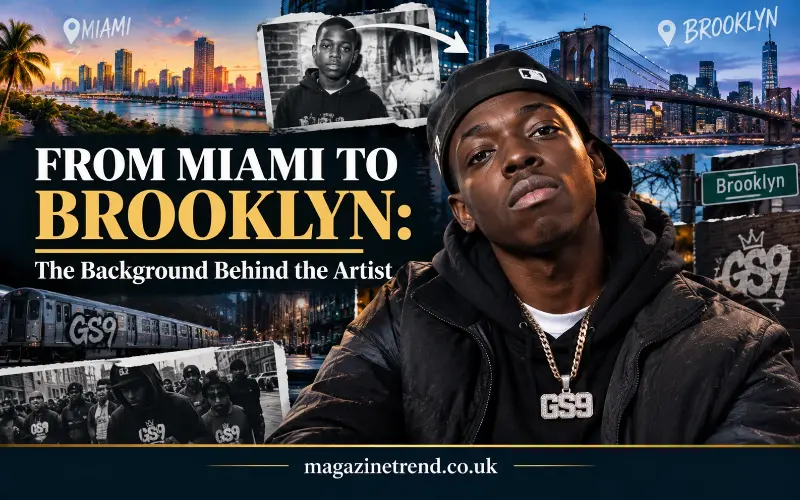
Bobby Shmurda was born in Miami, Florida, on August 4, 1994. He later moved with his family to Brooklyn, New York, where the local environment and East Coast hip-hop culture became important parts of his background.
Brooklyn has a long musical history, from influential rap collectives to artists who have helped shape regional sounds. By the time Shmurda began attracting attention, social media and video-sharing platforms were changing how new rappers reached audiences. A song no longer needed to build its reputation exclusively through radio play, physical releases or established industry connections.
Shmurda’s music reflected the direct, high-energy style associated with the Brooklyn rap scene of his breakthrough period. His delivery was forceful, his hooks were memorable, and his recordings often drew on street narratives. These elements helped his music stand out in a crowded online environment.
His early association with the GS9 circle also became part of the public story surrounding his career. GS9 was linked to his music and local network, but later legal proceedings made that association a serious and consequential part of his biography. It is important to distinguish between the artistic identity presented in music and the specific allegations, charges and convictions reported in court-related coverage.
The contrast between his musical ambitions and the legal events that followed would become central to the way audiences discussed him. His career moved from local recognition to national attention in a short period, leaving little time for a gradual transition into mainstream celebrity.
The “Hot N*gga” Moment: How a Song Became a Cultural Event
“Hot N*gga,” released in 2014, was the breakthrough that introduced Bobby Shmurda to a much wider audience. The song’s beat, delivery and instantly recognisable energy made it particularly suited to short video clips and online sharing.
The accompanying music video became a major part of its appeal. In it, Shmurda performed a distinctive dance that audiences began calling the Shmoney Dance. The movement circulated through Vine and other social platforms, turning a moment from a music video into a trend that people could imitate, remix and share.
The dance gave the song a life beyond its original recording. People who might not have discovered a new rapper through radio or music publications could encounter the track through a short clip. The same move could appear in celebrity posts, fan videos and entertainment coverage, creating a cycle in which the song and the dance promoted each other.
The Guardian reported in 2014 that the Shmoney Dance had spread widely online and had been picked up by major entertainment figures. That attention helped transform Shmurda from an emerging rapper into a nationally recognised name. The Guardian’s 2014 coverage documents the speed and scale of the trend.
The song also performed strongly on the US charts, reaching the top 10 of the Billboard Hot 100. That achievement gave Shmurda commercial recognition beyond the viral moment.
Why the Shmoney Dance Mattered
The Shmoney Dance was not simply a promotional gimmick attached to a successful record. It showed how audiences could participate in a song’s popularity by recreating its most memorable moment. The listener became a performer, and the music video became a source of material for an expanding online community.
This helped establish a model that later became familiar across social media: a track could gain momentum when a particular movement, phrase or visual moment was easy to repeat. In Shmurda’s case, the dance was closely tied to his identity, making the trend difficult to separate from the artist himself.
The episode also demonstrated the unpredictable nature of internet fame. A brief moment captured on video helped make a rapper internationally recognisable, but maintaining a career required more than a single viral event.
Related Post: Julian Lennon: Biography, Music,Family and Life Today
Bobby Shmurda’s Music Before and After the Breakthrough
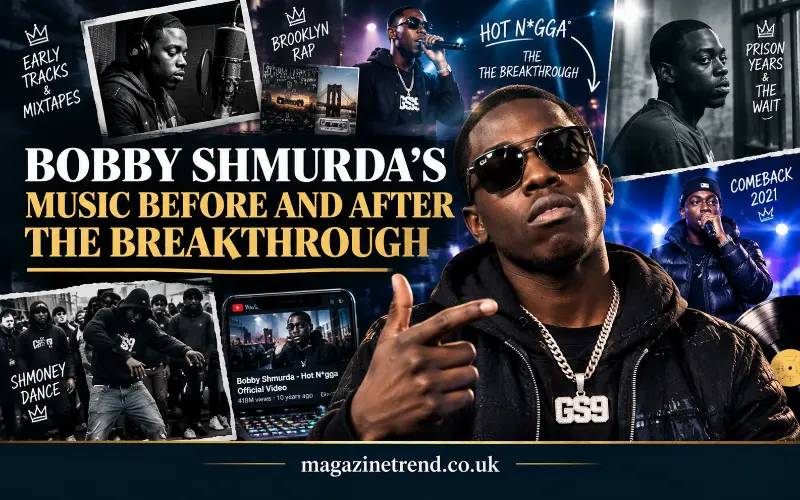
The success of “Hot N*gga” opened doors quickly. Shmurda signed with Epic Records and released additional material in 2014, including the EP Shmurda She Wrote. Songs such as “Bobby Bitch” helped extend attention beyond his breakout single.
His early catalogue was compact, but it captured the raw energy and confident delivery that had drawn listeners to him. Rather than building a reputation over many years, he had to develop an artistic identity while already under intense public scrutiny.
The interruption that followed his arrest limited the time available to build on that momentum. A young artist who might ordinarily have spent the next several years recording albums, touring and collaborating instead faced a lengthy period away from normal professional activity.
After his release in 2021, Shmurda began releasing music again. “No Time for Sleep (Freestyle)” marked his return to solo releases, while “Shmoney,” featuring Quavo and Rowdy Rebel, connected him with familiar collaborators and the musical circle associated with his early rise.
His post-release work included the BodBoy EP in 2022. The project gave listeners a new body of music to assess rather than asking them to rely solely on memories of 2014. Reception was mixed, and the challenge was clear: the cultural conditions that helped create “Hot N*gga” had changed considerably.
Bobby Shmurda’s Major Songs and Projects
| Song or project | Release period | Importance to his career |
| “Hot N*gga” | 2014 | Breakthrough single that made him a viral sensation |
| “Bobby Bitch” | 2014 | Extended attention around his early success |
| Shmurda She Wrote | 2014 | Debut EP released during his breakthrough year |
| “No Time for Sleep (Freestyle)” | 2021 | Marked his return to solo music after prison |
| “Shmoney” featuring Quavo and Rowdy Rebel | 2021 | Reconnected him with collaborators linked to his early era |
| BodBoy EP | 2022 | Showed his attempt to establish a new phase of his career |
| “Cash Out” | 2025 | Part of his later run of releases |
| “Week Ago” | 2026 | Listed among his latest releases in September 2026 |
For release information, see Bobby Shmurda’s Apple Music profile, which lists his catalogue and recent singles.
The Legal Case That Interrupted His Career
In December 2014, Shmurda was arrested in New York as part of a wider investigation involving members of the GS9 circle. The case brought serious charges and extensive media attention at a time when his music was reaching a growing audience.
In 2016, he accepted a plea deal and was sentenced to seven years in prison. Contemporary reporting by the Associated Press, published by CBS News, covered the sentence and the circumstances of the case. Read the Associated Press report.
The case became a major turning point because it interrupted his career while his commercial prospects were still developing. Instead of following the usual schedule of recording, releasing projects and touring, he spent years incarcerated.
Coverage of the case often placed his legal troubles alongside the lyrics and public image associated with his music. However, a responsible biography should separate documented legal outcomes from broader assumptions about an artist’s life or character. His sentence was a real event with lasting consequences, but it does not account for every aspect of his music or subsequent work.
The interruption also raises a wider question about the relationship between viral fame and long-term career development. Shmurda had achieved extraordinary visibility before he had the opportunity to build a substantial discography. The time away meant that his return would take place in an industry with new artists, changing platforms and different audience habits.
Related Post: Roz Varon: Biography, Career, Retirement and Life After ABC7
Prison, Release and the Meaning of the Comeback

Bobby Shmurda was released from prison in February 2021 after serving more than six years. His return received significant attention in hip-hop, and fellow artists celebrated the moment. The release became a cultural event in part because fans had spent years following his case and anticipating his return.
The comeback was not simply a matter of walking back into the position he had occupied in 2014. Music scenes change quickly. New artists emerge, listeners move between platforms, and the sound that once dominated a moment may no longer be the only sound audiences want to hear.
Shmurda returned with a name people remembered, but he also had to introduce his work to listeners whose musical tastes had developed while he was away. His early releases after prison reflected the need to reconnect with his audience and establish a new rhythm of output.
The public interest surrounding his release was an advantage: people were curious about his next move. Yet curiosity and sustained listening are different things. A comeback requires songs that listeners choose to revisit, not just headlines about an artist’s return.
His post-release career therefore has two overlapping stories. One is the continuing cultural legacy of “Hot N*gga” and the Shmoney Dance. The other is the effort to create new music and maintain a professional presence after a major interruption.
Leaving the Major-Label Deal and Pursuing More Independence
Shmurda’s later career included a move away from Epic Records. The FADER reported that he parted ways with the label in 2022, a development that drew attention to his next steps as an artist. The FADER’s Bobby Shmurda coverage includes reporting on his departure and subsequent releases.
Leaving a major label can change how an artist approaches recording, marketing and distribution. It may offer greater control over creative decisions, but it can also mean taking on more responsibility for building an audience, promoting releases and coordinating projects.
For Shmurda, the move came after a career already shaped by unusual circumstances. He had become famous quickly, spent years away from the industry and returned to a music market transformed by streaming and social media. A different professional arrangement gave him another route for releasing music, though it did not remove the challenge of sustaining public attention.
Independence is not automatically a guarantee of success, just as a major-label contract does not guarantee lasting popularity. The more meaningful question is whether an artist can consistently release work that connects with listeners and build a clear direction over time.
Bobby Shmurda’s Latest Music and Current Direction
Shmurda remains active in music, with releases listed through 2025 and 2026. His Apple Music profile includes “Cash Out” among his 2025 releases and lists “Week Ago” as a single released on September 24, 2026. These listings show that his career continues beyond the songs that made him famous a decade earlier.
His current position is best viewed through the music he is releasing rather than predictions about how successful his next phase will be. The hip-hop landscape is competitive, and an artist’s historical fame does not automatically translate into new chart success. At the same time, an established name can provide a platform for experimentation and new collaborations.
The years since his return have also placed greater emphasis on how artists maintain visibility between releases. Interviews, online video, social media and direct interaction with fans can support a music career, but the long-term value of those activities depends on the work behind them.
Shmurda’s recent releases indicate that he has continued to put music into the market. Whether this period becomes a sustained artistic reinvention or a series of individual releases will depend on future projects and audience response.
Bobby Shmurda’s Net Worth: What Can Be Confirmed?
Bobby Shmurda’s exact net worth is not established by a publicly verified financial statement. Figures published by celebrity-wealth websites are estimates and can vary substantially, so they should not be treated as confirmed facts.
His possible sources of income include music streaming, recording royalties, live performances, publishing, merchandise and commercial partnerships. The amount he personally retains depends on contracts, expenses, taxes, management arrangements and other financial commitments.
A major hit can generate revenue over time, but chart success alone does not reveal an artist’s current wealth. Rights ownership, distribution agreements and the division of royalties all affect how much income reaches the performer.
For that reason, it is more accurate to describe the likely income streams connected to Shmurda’s career than to publish a precise net-worth figure without reliable evidence. His early commercial success and continued releases are documented; his complete personal financial position is not.
What Makes Bobby Shmurda’s Story Different?
Many artists become known through a breakout song, but Shmurda’s case stands out because the viral moment, legal interruption and long-awaited return became intertwined in public memory.
First, the Shmoney Dance made his breakthrough participatory. Fans were not simply listening to the track; they were recreating a movement associated with it. That helped the song travel through social platforms at a speed that traditional promotion alone might not have achieved.
Second, his career was interrupted before he had the opportunity to build the extensive catalogue usually expected of a major new rapper. The gap between his breakthrough and his return shaped the way listeners evaluated his later music.
Third, his comeback occurred in an industry that had changed. Streaming services, short-form video and online creator culture had become central to music discovery. The conditions that helped “Hot N*gga” spread were not identical to those facing a new release in the 2020s.
Finally, his story shows why cultural recognition and career longevity are not the same thing. A song can remain instantly recognisable for years, while the artist behind it still has to earn attention for new work. Shmurda’s continuing releases represent an effort to move beyond a defining moment without erasing its importance.
FAQs
What is Bobby Shmurda’s real name?
Bobby Shmurda’s birth name is Ackquille Jean Pollard. He performs professionally under the name Bobby Shmurda.
How old is Bobby Shmurda in 2026?
He was born on August 4, 1994, which makes him 32 years old in 2026.
What song made Bobby Shmurda famous?
“Hot N*gga,” released in 2014, brought him widespread attention. The track became closely associated with the Shmoney Dance, which spread across social media and helped turn the song into a cultural phenomenon.
How long was Bobby Shmurda in prison?
He received a seven-year sentence in 2016 and was released in February 2021 after serving more than six years. The exact calculation of time served included credit for time spent in custody before sentencing.
Is Bobby Shmurda still making music?
Yes. His streaming-service discography lists releases in 2025 and 2026, including “Week Ago,” released on September 24, 2026.
What is Bobby Shmurda’s net worth?
His exact net worth has not been confirmed through publicly verified financial records. Online estimates vary, so a specific figure should be treated cautiously.
Conclusion
Bobby Shmurda’s career cannot be reduced to a single song, even though “Hot N*gga” remains the defining release of his rise. The track and the Shmoney Dance captured a moment when social media could turn an emerging rapper into a widely recognised figure almost overnight.
His subsequent legal case and years in prison interrupted that momentum, while his release in 2021 created an opportunity to begin another phase. Since then, he has released new music, moved beyond his original major-label arrangement and continued working in a rap industry that has changed significantly since his breakthrough.
The lasting question is not whether he can recreate the exact conditions of 2014. It is whether his newer work can build its own audience and establish a future beyond nostalgia. His recent releases show that he remains active, while the long-term shape of his comeback will be determined by the music he continues to make.
For magazinetrend.co.uk readers, Bobby Shmurda’s story offers a revealing look at the complicated relationship between viral fame, personal circumstances and artistic longevity. The Shmoney Dance made him a cultural name; what comes next depends on the work he releases now.
